Are all your employees really protected? An opinion piece by Matt McLean, Regional Accident and Health Manager, Aviva
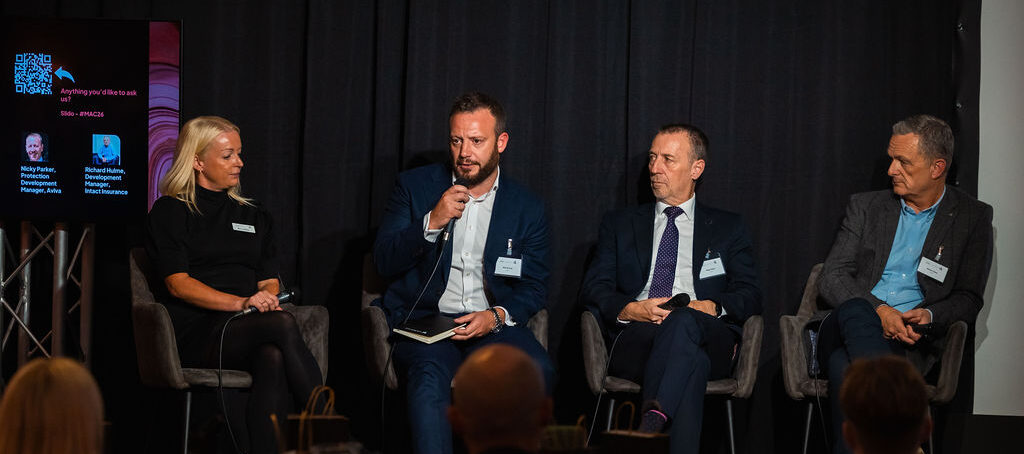
I recently had the pleasure of speaking at the MAC Group Employee Benefits Conference, where we discussed the much wider challenge of how businesses protect, support and retain their people. My session focused on one area that can sometimes be overlooked within that conversation: what happens when an employee experiences a serious problem while travelling on business?
Employee benefits are rightly associated with helping businesses attract, retain and look after their people.
For Isle of Man employers in particular, having a strong benefits proposition can also form part of the wider competition for the best talent, whether that’s retaining people already on the Island or attracting the skills and experience businesses need to grow.
But good employee protection isn’t purely about the employee. It can protect the business too. If somebody becomes seriously ill or injured, particularly while carrying out their job or travelling on the company’s behalf, there can be financial, operational and duty-of-care implications for the employer as well.
That’s why I think Personal Accident, Sickness and Business Travel insurance all have an important part to play in a well-rounded employee benefits programme.
If you’re asking employees to travel, make sure they’re properly protected
One of the areas I really wanted to focus on was Business Travel.
If you’re asking an employee to get on a plane and travel somewhere on behalf of your business, you’ve created a travel exposure. The question then becomes: if something happens to them while they’re away, what support have you actually put in place?
The consequences can become serious very quickly.
Take the USA as an example. A significant medical event requiring hospitalisation can generate extremely high costs, with hospital care potentially running into hundreds of thousands of dollars depending on the treatment required. Using the example we discussed at the conference, a hospital bed could cost around $20,000+ a night in a serious case.
And the cost is only part of it. Who does the employee call? Who speaks to the hospital? Who arranges treatment? What happens if they need to be medically repatriated? How does the employer get them home?
And when an employee is travelling on behalf of your business, these are questions the business needs to have thought about before something goes wrong.
That’s where a good Business Travel policy becomes much more than simply something that pays a claim. The assistance infrastructure behind the policy can be just as important as the insurance itself.
Business Travel is particularly relevant to the Isle of Man
For businesses on the Isle of Man, travel brings another dimension.
Many business journeys naturally begin with a flight or ferry, creating an additional point at which disruption can affect an employee’s journey. When weather, technical problems or other disruption occurs, the alternatives can be more limited than they are for somebody travelling between two mainland UK locations.
That makes benefits such as change of itinerary, travel delay, missed departure and abandonment particularly relevant.
Repatriation is another important consideration. Even where somebody has received treatment on the UK mainland or in Ireland, getting them home to the Isle of Man can become a significant expense. An air ambulance repatriation back to the Island can cost upwards of £15,000, depending on the circumstances and medical support required. Importantly, those repatriation costs aren’t necessarily covered by public healthcare or reciprocal healthcare arrangements.
Simply getting an employee back to the UK following an illness or accident isn’t necessarily the end of the journey when their home is on the Island.
Having the right Business Travel cover and assistance services behind them can therefore make a significant difference, both for the employee and the business responsible for getting them safely home.
Business Travel can also become a genuine employee benefit
Something else we discussed was that Business Travel insurance doesn’t necessarily have to stop when the business trip finishes.
Employers can consider extending arrangements to include leisure travel for employees, turning what might otherwise be viewed as a corporate insurance purchase into something employees can personally benefit from.
This can be particularly attractive because corporate policies can offer very broad cover compared with some individually purchased retail travel products.
Depending on the policy, that can also mean fewer of the restrictions employees may encounter when buying their own travel insurance, potentially including a different approach to pre-existing medical conditions, age limits and activity exclusions.
So rather than every employee separately arranging travel insurance for each family holiday, an employer-funded programme can potentially give employees access to broad annual travel protection as part of their overall benefits package.
We are travelling in an increasingly unpredictable world
The world has become an increasingly unpredictable place, and that has changed the risk landscape for businesses asking their employees to travel.
We have seen major conflict return to Europe with the war in Ukraine, continued instability in Israel and the wider Middle East, and geopolitical events that can quickly affect airspace, flight routes and international transport hubs.
Importantly, employees don’t necessarily have to be travelling to an affected country to be exposed to disruption. Many long-haul journeys involve connections through major international hubs such as Dubai and Doha, meaning an event somewhere in the region can have consequences for travellers whose ultimate destination may be somewhere completely different.
For employers, it reinforces why Business Travel insurance shouldn’t just be viewed as cover for lost baggage, cancelled flights or medical bills.
Businesses need to think about what happens when circumstances change unexpectedly, and whether the support they’ve put in place is capable of responding when they do.
Bringing it all together
The biggest thing I took away from the MAC Commercial Employee Benefits Conference was just how broad the employee benefits conversation has become.
Different businesses and different workforces need different things. There isn’t a single product or solution that works for everybody, which is why understanding your people, the risks they face and what they genuinely value is so important.
That also highlights the importance of having a good broker. Employee benefits can be a complicated landscape, and a broker who really understands the business can help bring the different areas together, challenge what is already in place and identify gaps that may otherwise be overlooked.
The best conversations aren’t simply about buying another product. They’re about understanding what a business is trying to achieve, what its people need and making sure the overall benefits package continues to deliver against that.
For me, that was the overriding message from the day. Employee benefits aren’t about individual products in isolation. They’re about understanding your people, understanding your business and bringing the right expertise together to make sure both are properly supported.
Warnings
This article is intended for general information purposes only and should not be relied upon as insurance, legal or professional advice.
The views expressed are those of the author and do not necessarily reflect those of MAC Group or its subsidiary companies.
The information contained in this article is based on the author’s experience and understanding at the time of writing and may be subject to change.
Insurance cover, policy terms, conditions, exclusions and limits vary between insurers and individual circumstances. Employers should review their own arrangements and seek professional advice before making decisions regarding insurance or employee protection programmes.
Examples provided are for illustrative purposes only and do not constitute a guarantee of cover or claim outcome.
If you would like to discuss any of the topics covered in this article, please contact MAC Insurance Brokers for further information.