
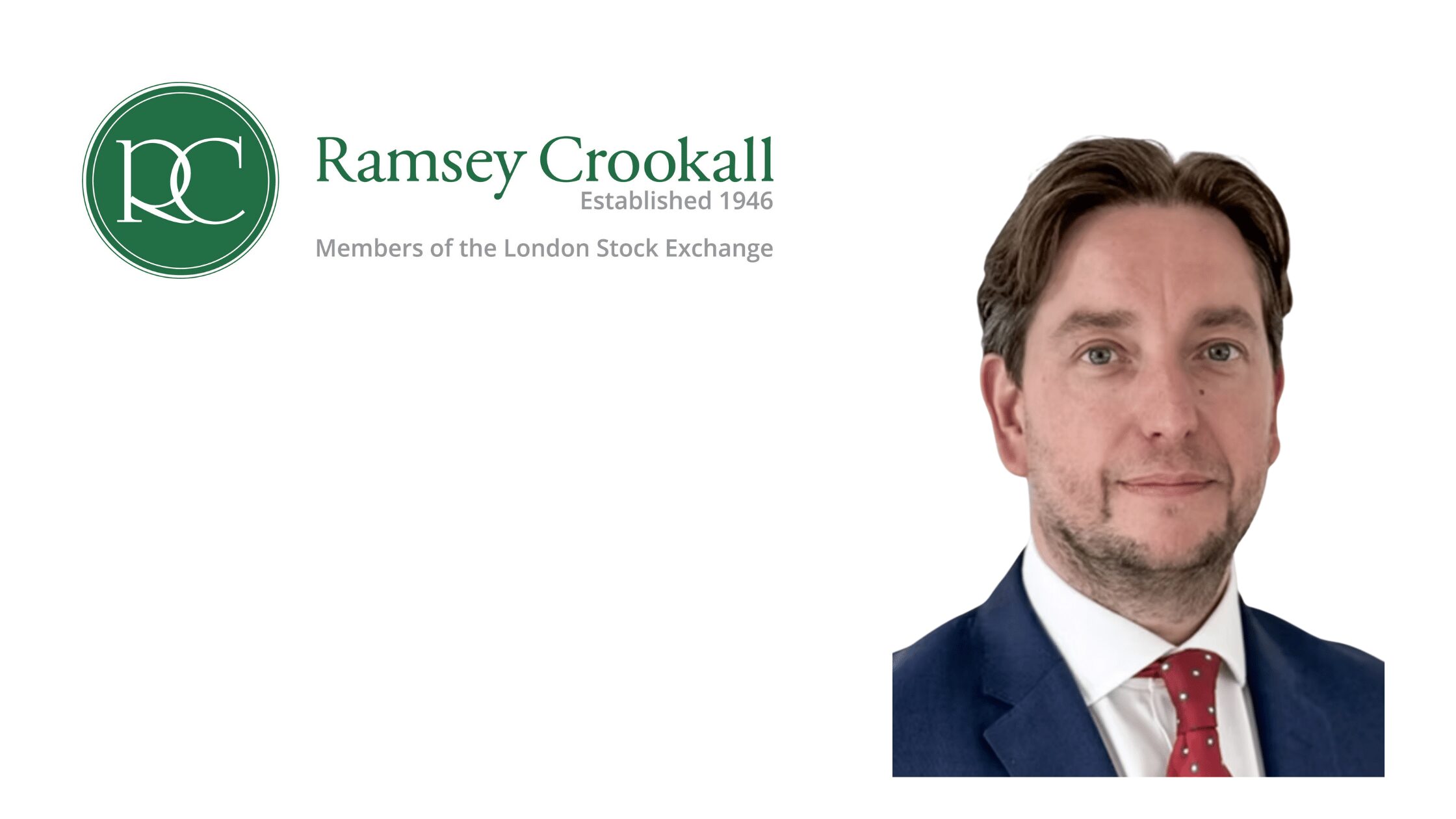
Guest opinion: Dogs of War – A Defence Sector Story by Lee Branston, Investment Manager
For a long time, defence companies across the UK and Europe sat in the naughty corner of the market – tolerated rather than treasured. Labelled ‘boring’ industrials with robust order books and long government procurement cycles, the sector looked like yesterday’s trade, defensive in both name and nature.
Then history changed the narrative.
As Shakespeare wrote in Julius Caesar – ‘Cry ‘Havoc! and let slip the dogs of war’. In today’s market, that phrase feels increasingly relevant. Recent conflicts have shown that weapons stockpiles run out faster than expected, that simply threatening military action doesn’t deter aggression, and that when a threat is real and immediate, defence spending becomes an urgent priority – not an optional one. The companies that make ammunition, missile defence systems, radar and surveillance technology, and the factories that produce military equipment at scale have all seen their value rise sharply as a result.
In the UK, BAE Systems has shifted from ‘solid dividend payer’ to strategic national asset, anchored by programmes like the SSN-AUKUS submarine – a multi-decade, government defence contract. Germany’s Rheinmetall, meanwhile, has become emblematic of Europe’s effort to rebuild ammunition capacity, where demand is now greater than supply. French defence firm, Thales secured a landmark £1.6bn air defence missile contract and Saab reinforced its position across Scandinavia and the Baltics, rebuilding military stockpiles in countries closest to Russia.
What is happening in the markets?
Global markets started 2026 reasonably well. However, the recent conflict in the Middle East has increased uncertainty, particularly because higher energy prices could push inflation up again. The FTSE 100 has risen about 3.7% so far this year (as of 12 March). The index has benefited from its large exposure to energy, financial, and industrial companies. The S&P 500 has fallen more than 2.5% since the start of the year. Despite this, US markets continue to attract global investment. Analysts expect a more moderate year for returns, with forecasts around 12% for the full year. International markets may offer better value than US equities. Earnings growth is expected to improve, and a weaker dollar could help returns. For retail investors, the broader message is one of cautious optimism: markets are moving, but investors will need to be selective and patient.
The risks are plain – procurement delays, political shifts, and the ever-present possibility that conflict gives way to negotiation. Once the dogs of war are unleashed, they are hard to control; politically, financially, and morally. For portfolios, defence companies may continue to benefit from higher military spending, but investors should approach with both conviction and care. The sector has become ‘sexy’ again – but it remains a glamour tinged with moral ambiguity.
A case for pound cost averaging
For retail investors drawn to the defence sector but wary of high share prices, pound cost averaging offers a measured path in. Rather than committing a lump sum at today’s prices, investing a fixed amount at regular intervals – monthly, for instance – means buying more shares when prices dip and fewer when they rise. In a market environment where sentiment can shift quickly, this approach smooths out the emotional highs and lows, reducing the risk of ill-timed entry. It won’t capture every rally, but it guards against the costliest mistake of all: buying heavily at the peak.
Shearwater, Ramsey Crookall’s discretionary fund management (DFM) model portfolio service, is designed for investors who want professionally managed exposure to global markets without making day-to-day investment decisions themselves. The models invest in a diversified selection of carefully researched open-ended funds, selected through a rigorous due-diligence process, and monitored against independent Managed Portfolio Indices benchmarks to ensure performance aligns with defined risk parameters. Investors choose a strategy – Cautious, Balanced, or Adventurous – based on their risk tolerance and long-term objectives, with portfolios typically targeting capital growth over a five- to ten-year horizon. The service is available via lump-sum or by regular pound cost averaging and provides ongoing monitoring, rebalancing, and reporting. Costs are designed to be competitive, with a 0.5% annual management fee.
Learn more
Established in 1946, Ramsey Crookall is the Isle of Man’s longest-established independent firm of stockbrokers and investment managers, now in its third generation, Ramsey Crookall is a trusted family firm that is continually evolving to meet our clients’ needs and expectations. Visit their website here.
Warnings
The views, thoughts and opinions expressed within this article are those of the author, and not those of Ramsey Crookall.
No news or research item should be construed as a recommendation to trade. The inclusion of securities within this report does not necessarily imply their suitability for individual portfolios or situations in respect of which further advice should be sought. Information contained in this piece has been compiled from sources believed to be reliable but is not warranted to be accurate or complete.
Any reference to past performance is not necessarily a guide to the future. The value of investments may go down as well as up and may be adversely affected by currency fluctuations.
Ramsey Crookall are Members of the London Stock Exchange and PIMFA | Licensed by the Isle of Man Financial Services Authority (IoMFSA) Registered Office: Ramsey Crookall and Co. Ltd., 38/42 Athol Street, Douglas, Isle of Man, IM1 1QH